






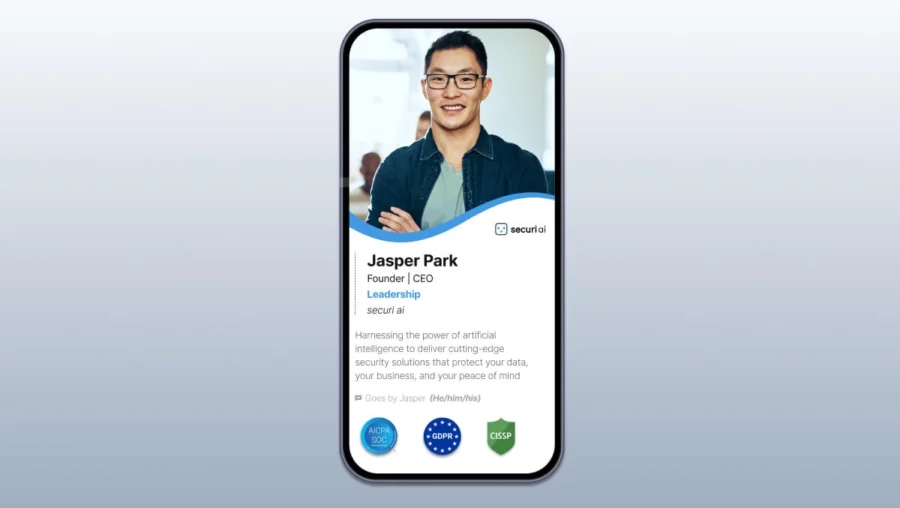
In an increasingly digital environment, how professionals communicate and exchange information is fast changing. One of the most visible changes is the transition from traditional paper business cards to the more current smart business card. This shift mirrors wider trends in technology, sustainability, and efficiency, as individuals and companies seek smarter methods to connect in both real and virtual contexts.
For decades, the standard business card has been a cornerstone of professional interactions. Handing such a nicely printed card was interpreted as a show of credibility and readiness. However, the limits of paper cards are becoming increasingly obvious, especially when contrasted with the flexibility and convenience provided by a smart business card. As expectations shift, so does the desire for tools that are compatible with modern working patterns.
One of the primary reasons consumers are adopting smart business cards is their capacity to store and distribute far more information than a regular card. While a paper card’s size and style are restricted, a smart business card may incorporate contact information, social media accounts, websites, portfolios, and even multimedia features. This enables professionals to portray themselves in a more dynamic and complete manner.
Another significant advantage of smart business cards is their ease. Traditional cards are often lost, damaged, or forgotten, however a smart business card may be retrieved instantaneously using a smartphone. This seamless accessibility guarantees that contact information is always readily available when required, lowering the risk of missed opportunities and lost connections.
Sustainability is also playing an important part in the transition to the smart business card. With increased awareness of environmental problems, many individuals and companies are attempting to minimise their dependency on paper goods. A smart business card eliminates the need to print, reprint, and dispose of traditional cards, making it a more environmentally responsible solution that reflects current principles.
Another element contributing to the smart business card’s appeal is cost effectiveness. While standard business cards require constant printing investment, particularly when details change, a smart business card may be updated instantaneously and at no further cost. This makes it an ideal alternative for professionals that regularly change their information or branding.
The development of remote working and digital communication has hastened the use of smart business cards. In a world when meetings are frequently held online, sending out a physical card is no longer practicable. However, a smart business card may be rapidly exchanged via digital channels, making it ideal for virtual networking scenarios.
Personalisation is another area where the smart business card shines. A smart business card may be modified to represent an individual’s brand, personality, and professional identity, as opposed to standard cards, which are static and have limited design options. This level of adaptability enables users to leave a stronger and more lasting impact.
The smart business card also boosts professionalism by allowing real-time changes. With a standard card, outdated information might lead to misunderstanding and missed opportunities. In contrast, a smart business card guarantees that receivers always have access to the most up-to-date information, boosting accuracy and dependability in professional relationships.
Data tracking and analytics are two more features that make the smart business card extremely intriguing. Users may learn a lot about how and when their cards are used, which can help them improve their networking skills. This amount of input is just not available with traditional paper cards, and it provides a strategic edge for corporate growth.
Security and hygiene concerns have also contributed to the rising popularity of the smart business card. Many individuals are more hesitant to make personal contact or exchange things in the aftermath of the outbreak. A contactless smart business card provides a safer option, allowing information to be transmitted without physical touch.
The smart business card is also helpful to improve networking efficiency. Instead of manually inputting contact information from a paper card, recipients can store it directly to their smartphones. This decreases administrative labour and the likelihood of mistakes, making follow-ups faster and more efficient.
From a branding standpoint, the smart business card projects a current and inventive image. Professionals that use this technology are frequently viewed as forward-thinking and adaptive, which are highly prized in today’s competitive industry. This small advantage has the potential to significantly impact how individuals and organisations are regarded.
The integration capabilities of a smart business card increase its attractiveness. It integrates smoothly with digital tools like contact management systems and communication platforms, resulting in a more holistic networking experience. This level of integration increases productivity and helps professionals stay organised.
Scalability is also a significant consideration. Traditional business cards may be time-consuming and costly to manage in firms with several employees. A smart business card system enables organisations to retain uniformity across teams while facilitating quick changes and centralised control.
A smart business card also provides a significantly better user experience. Interactive elements, simple sharing choices, and an intuitive design make it easier for receivers to interact with the information presented. This results in a more interesting and memorable engagement than the static nature of paper cards.
As younger generations enter the workforce, their desire for digital solutions influences the adoption of smart business cards. These people are used to utilising technology in many parts of their life and expect the same level of ease and functionality in professional situations.
The smart business card also enables worldwide networking. In an increasingly linked world, professionals frequently deal with connections from many locations. A digital solution eliminates geographical constraints, allowing information to be transferred instantaneously and regardless of location.
Reliability is another significant feature. Paper cards can fade, rip, or become illegible over time, but a smart business card is consistent and easily accessible. This resilience guarantees that contact information remains intact and accessible when required.
The ability to stand out in a crowded market is critical, and a smart business card provides a unique opportunity to do so. Its creative character draws attention and distinguishes users from those who rely on traditional ways, so helping to leave a lasting impression.
Finally, the change to smart business cards reflects a larger trend toward efficiency, sustainability, and digital integration. As technology continues to alter how we work and interact, traditional business cards become increasingly irrelevant.
The expanding use of smart business cards suggests a major shift in professional networking. It provides a better, more adaptable, and more productive method to connect, making it a popular choice for both individuals and businesses. As this trend continues, smart business cards are poised to become the new norm for modern networking.