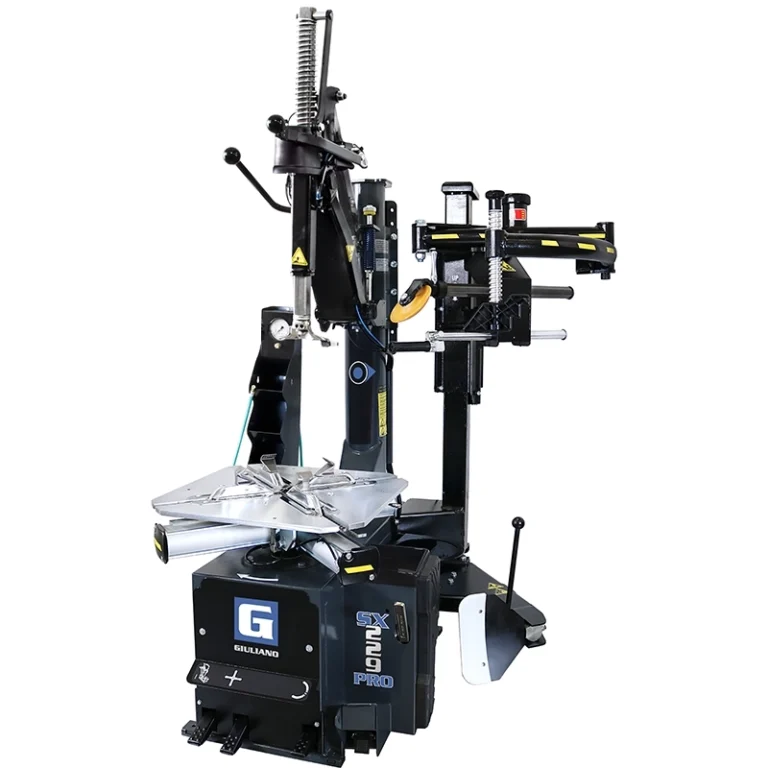






Over the past few decades, the vehicle repair sector has seen tremendous technical improvement, with equipment innovations radically altering how mechanics carry out their regular duties. Tyre changers stand out among these innovations as one of the most significant additions to workshop operations, offering notable advantages in terms of both productivity and workplace safety. What was once a labour-intensive and potentially dangerous manual process has been simplified and made more efficient by tyre changers, protecting mechanics and improving service quality.
Tire removal and tyre fitting to wheel rims was a physically taxing operation that took a lot of strength, skill and time prior to the widespread use of tyre changers. Tyre irons and manual leverage techniques were frequently difficult for mechanics, putting their hands, joints, and backs at risk. The use of tyre changers has greatly reduced the danger of work-related injuries and allowed workshops to finish tire-related services more quickly. This development reflects a fundamental advance in the way contemporary garages function, not just a convenience.
The main benefit that tyre changers offer to auto companies is a significant decrease in the physical strain placed on technicians. In order to change tires manually, technicians had to use a lot of force, frequently in awkward positions that strained their shoulders and lower back. Experienced mechanics may eventually have to retire early or take extended sick leave due to persistent musculoskeletal issues brought on by this repetitive strain. By using pneumatic or hydraulic systems to do the heavy lifting, modern tyre changers do away with the necessity for such hard labour. Mechanics may operate the machine using straightforward controls while the technology takes care of the taxing parts of the task.
When workshops invest in high-quality tyre changers, workflow efficiency is significantly improved. An skilled mechanic may now do a task that would have previously taken them fifteen to twenty minutes per wheel in a fraction of that time. Because of this time savings, the workshop can accommodate more customers throughout the day without sacrificing the quality of their services. Less experienced technicians can produce expert results more rapidly thanks to the constancy that tyre changers offer, which lowers the learning curve and gives workshops greater flexibility in allocating their workers to different jobs.
When assessing the advantages of tyre changers, safety concerns go beyond physical strain. There were many risks associated with changing tyres by hand, such as the potential for wheel assemblies to fall during the procedure, tyre irons to slip and injure hands or tyres to unexpectedly separate from rims and strike the technician. Professional tyre changers have several safety elements that are intended to stop these kinds of incident. Bead-breaking mechanisms that safely separate the tire from the rim without violent movements, clamping systems that firmly hold the wheel assembly in place throughout the process, and controlled inflation procedures that enable mechanics to remain clear during the crucial moments when the tire bead seats onto the rim are typical features of the machines.
Modern tyre changers’ adaptability allows workers to operate with a large range of wheel and tyre combinations, which greatly increases workplace efficiency. Modern cars with a wide range of wheel specifications—from little car wheels to big alloy rims for SUVs and sports cars—arrive at workshops. The various operating modes and adjustable clamping mechanisms of high-quality tyre changers enable mechanics to securely handle this wide range of wheel types. Because to its adaptability, workshops can provide clients with unique wheel specifications, increasing their market reach and guaranteeing that their mechanics can operate safely on any kind of vehicle.
When workshops use expert tyre changers, customer satisfaction increases significantly since these devices lower the possibility of pricey alloy wheels sustaining cosmetic damage. Wheel rims could easily get dents, scratches, or scuffs from manual changing techniques, which could result in costly warranty claims and customer complaints. In order to reduce contact between hard metal parts and the tire surface, modern tyre changers contain protective features like polymer-coated clamps and meticulous leverage control. In addition to preventing damage, this protection increases customer trust as car owners see the importance of workshops that invest in the right tools to maintain their priceless wheel assemblies.
Throughout the entire workshop operation, tyre changers have financial advantages. Although the initial cost of purchasing high-quality equipment must be taken into account, the benefits are felt in a variety of ways. Higher throughput and more income possibilities result from shorter service times. Reduced insurance premiums and fewer sick days are the results of lower injury rates. Reduced wheel damage leads to a better reputation and fewer warranty claims. Furthermore, mechanics who use the right tyre changers report greater job satisfaction, which can save recruitment costs and increase staff retention in a field where it’s getting harder to find qualified experts.
Modern tyre changers make it much easier to train new mechanics with workshops. These machines’ standard operating procedures provide a uniform foundation for learning that aids in the early development of appropriate practices by inexperienced technicians. Trainees can adhere to precise operating rules that guarantee safe, efficient results rather than learning potentially hazardous manual procedures that may differ among teachers. In addition to lowering the possibility that unskilled mechanics could harm themselves or damage client wheels while learning, this training consistency helps preserve quality standards throughout the workshop.
Tyre changers perform admirably in terms of ergonomics, which is important for long-term mechanic health. Because of the robots’ ability to put wheels at comfortable working heights, mechanics no longer have to crouch, bend, or operate in confined spaces. Because of its well-considered design, technicians can change tires with improved posture, which lessens fatigue and avoids the buildup of minor stresses that could become major issues after years of use. Investing in the right tyre changers shows a dedication to establishing a healthy workplace for workshop owners who care about the welfare of their personnel.
Both the workshop and its clients benefit from the constancy of outcomes produced by expert tyre changers. Regardless of the mechanic performing the service, every tyre is mounted and balanced in accordance with the same exacting standards. This consistency guarantees that clients receive dependable, high-quality service each and every time, enhancing the workshop’s stellar reputation. Tyre changers use controlled procedures to lessen the possibility of mistakes such incorrect bead seating or rim damage, which could result in safety problems or early tyre failure.
The organisation and cleanliness of the workshop are also improved with modern tyre changers. These machines offer a specialised station where all tire-related activity takes place in a controlled manner, in contrast to manual changing methods that could disperse tools and components around the work area. By cutting down on the amount of time mechanics spend finding tools and setting up workspaces, this structure increases overall workshop productivity. Additionally, it improves safety by keeping paths clear and making sure that potentially dangerous objects, like tyre irons, are stored appropriately rather than left laying around where they could trip people or cause falls.
Professional tyre changers are becoming more and more important as vehicle technology advances, with innovations like run-flat tires, low-profile performance tires, and specialised electric vehicle wheel assemblies becoming increasingly popular. These more recent tyre technologies frequently call for particular handling techniques that would be very challenging or impossible to do out properly by hand. By having versatile tyre changers, workshops can confidently service these contemporary cars, setting themselves up for long-term relevance as the automotive industry changes.
Tyre changers, in conclusion, are a necessary investment for any professional automobile workshop because they increase all major operational metrics. They prevent injuries to technicians, expedite service delivery, improve customer happiness, lower expenses, make training easier, and prepare the company for changing automotive technologies. The revolution these machines bring to everyday workshop operations shows how focused equipment investment can significantly enhance employee working conditions and the company’s overall profitability.