





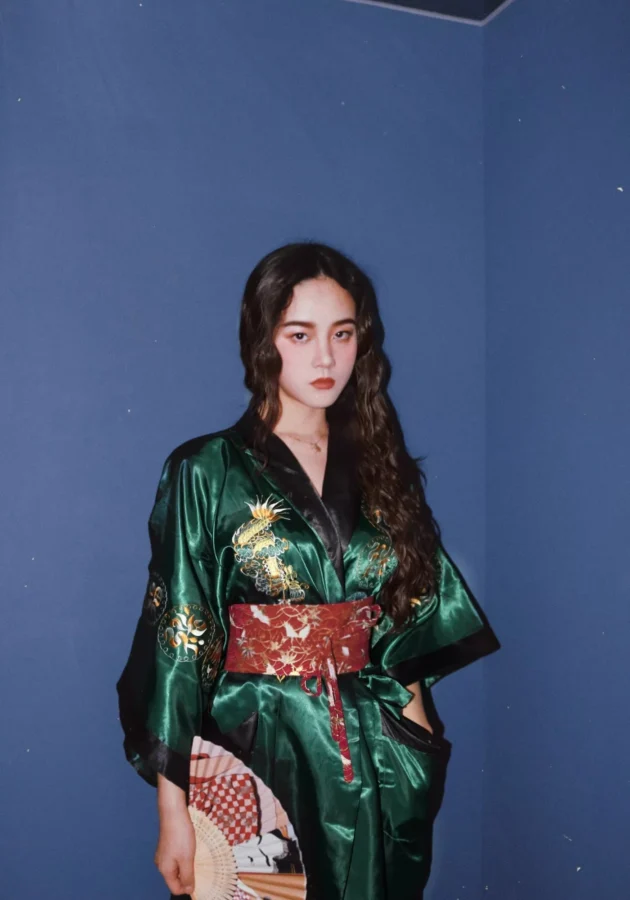
The kimono has become one of the most recognisable influences in modern fashion, influencing silhouettes, fabrics, and design in a manner that transcends its traditional origins. The kimono has evolved from a statement piece to a subtle reference, making it a prominent feature in both high-end catwalks and everyday ensembles. This demonstrates how a garment with centuries of history can still feel strikingly contemporary.
To comprehend the kimono’s impact on contemporary fashion, it is beneficial to briefly examine its origins as a structured yet deceptively simple robe composed of straight panels of cloth that are coiled and folded around the body. The kimono was developed in Japan over the course of centuries, transitioning from earlier garments to a T-shaped robe with wide sleeves and a sash that was intended to skim the body rather than adhere. This simple construction, which is based on rectangles rather than intricate tailoring, is one of the reasons the kimono is so easily adaptable to modern fashion, where both designers and consumers prioritise adaptable layering and clean lines. When contemporary designers incorporate elements of the kimono, they frequently utilise its silhouette as a model for garments that flex with the wearer rather than stifle them, capitalising on the kimono’s equilibrium between structure and fluidity.
The popularity of loose, unstructured outer layers that drape over simple bases such as jeans, dresses, or tailored trousers is one of the most visible influences of the kimono in contemporary fashion. This concept is reminiscent of the way traditional robes added formality and elegance over inner layers, as a lightweight kimono jacket or robe-style coat can be thrown over everyday outfits to create immediate drama without sacrificing comfort. The kimono’s broad sleeves are frequently transformed into three-quarter or bracelet-length shapes by designers and stylists, which preserves the garment’s fluidity while also making it practical for daily wear. The wrapped closure of the kimono is directly echoed by the open front of numerous contemporary pieces, which also enables wearers to mix and match the colours, designs, and textures beneath. This demonstrates how the kimono’s silhouette can be softened or sharpened to accommodate various dress codes, thereby serving as a bridge between loungewear, streetwear, and refined daywear.
The kimono’s approach to pattern and surface design is another significant way in which it influences contemporary fashion. For centuries, traditional kimono garments have been utilised as canvases for intricate motifs, ranging from symbolic landscapes to seasonal blossoms, that are arranged to flatter the body when the robe is worn and tied. In the present day, the kimono serves as an inspiration for bold prints on jackets, dresses, and even accessories. These patterns are designed to wrap around the body rather than rest flat like a simple repeat. Numerous contemporary designers draw inspiration from the concept of storytelling through fabric, arranging motifs in a manner that allows them to cascade from the shoulder to the hem, evoking the narrative flow that is evident in historic kimono. Simultaneously, certain contemporary kimono-inspired pieces adopt minimalism, employing solid colours and subtle textures that still reference the garment’s flowing shape without relying on ostentatious decoration. This adaptability demonstrates the kimono’s visual language’s ability to be translated into both maximalist and pared-back aesthetics across the fashion spectrum.
The increasing prevalence of belt and sash details that cinch loose garments at the waist is also a clear indication of the kimono’s influence. The traditional obi, a broad sash used to secure a kimono, has inspired innumerable modern interpretations, ranging from soft tie belts on wrap dresses to structured bands that create a sculpted midsection on coats and tops. The ritual of tying an obi is echoed by the contemporary kimono-style garment, which is fastened with a fabric belt instead of buttons. This design also provides a greater degree of flexibility in terms of how tightly or loosely it can be worn. This method enables the same garment to be worn in a relaxed manner one day and more formal the next, all by adjusting the knot. This approach is in line with the contemporary expectations of flexibility and personalisation in apparel.. The belt detail also underscores the interplay between the curved body and the straight-cut fabric, a fundamental principle that is shared by both classic kimono and their contemporary descendants.
Another significant influence of the kimono on contemporary fashion thinking is sustainability. The traditional kimono is a highly efficient use of fabric, as it is primarily composed of linear rectangular panels. Additionally, it can frequently be unpicked, repaired, or remade without generating excessive waste. Contemporary designers who draw inspiration from the kimono frequently implement comparable zero-waste or low-waste cutting techniques, resulting in garments that demonstrate both environmental responsibility and craftmanship. Additionally, certain contemporary artisans recycle vintage kimono textiles, converting them into jackets, dresses, or accessories, thereby extending the lifespan of the original fabric. This emphasis on reinterpretation, repair, and longevity is indicative of a trend in fashion that is moving away from disposable items and toward pieces that can be cherished and restyled over the course of many years.
In recent years, the kimono has exerted an increasingly substantial impact on the expression of gender in the fashion industry. The kimono, in contrast to numerous Western garments that were designed around strongly gendered shapes, has historically relied on a relatively similar base pattern for different wearers, with variations accomplished through fabric, styling, and accessories. Modern fashion has recognised this, as kimono-inspired pieces are frequently marketed as unisex or designed to accommodate a wide variety of body types without the need for extensive tailoring. Kimono jackets and robes are worn by individuals of all genders on city streets and in creative communities, where they are layered over a variety of clothing, from formal shirts to casual T-shirts. This demonstrates how the garment’s inherent fluidity is conducive to non-binary and inclusive design. This has contributed to the kimono’s status as a symbol of liberation from restrictive dress regulations, enabling individuals to experiment with silhouette and movement without being limited by conventional norms.
The kimono’s influence has been significantly expanded beyond formal events as a result of street style. In urban fashion districts, young individuals frequently combine kimono-style jackets with denim, trainers, and graphic tops to create styles that are both rebellious and rooted. These garments are practical for daily wear due to their cropped sleeves, lightweight fabrics, and shortened haori-like layers, while still clearly referencing the classic kimono outline. The effortlessness with which a kimono-inspired piece can be donned or removed is also well-suited to the fast-paced nature of city life, where ensembles must be able to adjust to changes in mood, setting, or weather. Over time, this style has transitioned from niche subcultures to mainstream fashion, where kimono jackets and garments are now widely recognised as desirable wardrobe staples.
The kimono’s influence is evident in both formal and occasionwear. The grace of the kimono is often translated into Western dress codes by borrowing the draped fronts, sweeping sleeves, and trailing hems from traditional robes in evening gowns, bridal pieces, and tailored ensembles. Designers frequently draw inspiration from ceremonial kimono, employing intricate patterns and luxurious fabrics to evoke a sense of ritual and prestige. In a manner that evokes the layered closures of historic robes, the asymmetry of a wrap-front design, in which one side spans over the other, adds visual interest and flatters the body. This combination of silhouettes demonstrates the kimono’s ongoing influence on the concepts of drama and elegance at nuptials, red carpets, and other significant events.
When discussing the impact of the kimono on contemporary fashion, it is crucial to consider cultural sensitivity and appreciation. It is imperative to employ the kimono’s iconography in a manner that is both respectful and informed, as it is not merely a garment but also a cultural symbol that is associated with rituals, ceremonies, and social significance. Many contemporary designers and wearers strive to recognise this by researching authentic techniques, engaging with traditional craftspeople, and acknowledging the kimono’s history. Simultaneously, regular fashion devotees can demonstrate their appreciation by comprehending fundamental etiquette, such as the correlation between motifs and seasons, and by refraining from caricatured or costume-like interpretations. This considerate approach enables the kimono’s influence to enhance contemporary fashion without diminishing a complex cultural heritage to a fleeting trend.
The kimono’s influence on contemporary fashion discourse has been further bolstered by digital culture and social media. The internet is awash with images of kimono-inspired outfits, ranging from casual robes worn over swimwear to statement jackets coupled with tailored looks. These images inspire experimentation among global audiences. Influencers and fashion enthusiasts frequently demonstrate the numerous ways in which a single kimono-style garment can be styled, thereby emphasising its adaptability and making it more accessible to individuals who may not have previously worn such silhouettes. The dissemination of kimono-inspired trends is expedited by this visual sharing, as viewers worldwide adjust the content to their respective climates, cultures, and inventories. Simultaneously, online platforms facilitate the acquisition of educational resources regarding the history and craftsmanship of kimono, thereby facilitating a more informed relationship with the garment’s legacy.
In the final analysis, the kimono’s impact on contemporary fashion is rooted in its capacity to provide both infinite potential and an immutable framework. The kimono offers a design vocabulary that embodies comfort, elegance, and reverence for craft, whether it is exhibited through subtle cutting techniques, bold prints, wrap fronts, or flowing sleeves. It is a natural match for contemporary wardrobes that prioritise self-expression and flexibility, as its adaptable silhouette is suitable for a variety of occasions, sizes, and genders. The kimono’s centuries-old tradition is maintained in new contexts by the ongoing reinterpretation of the garment by designers, stylists, and everyday wearers, demonstrating that true classics are perpetually evolving. The kimono’s ongoing dialogue with contemporary fashion indicates that this iconic garment will continue to inspire future generations of style in ways that we are only beginning to envision.