





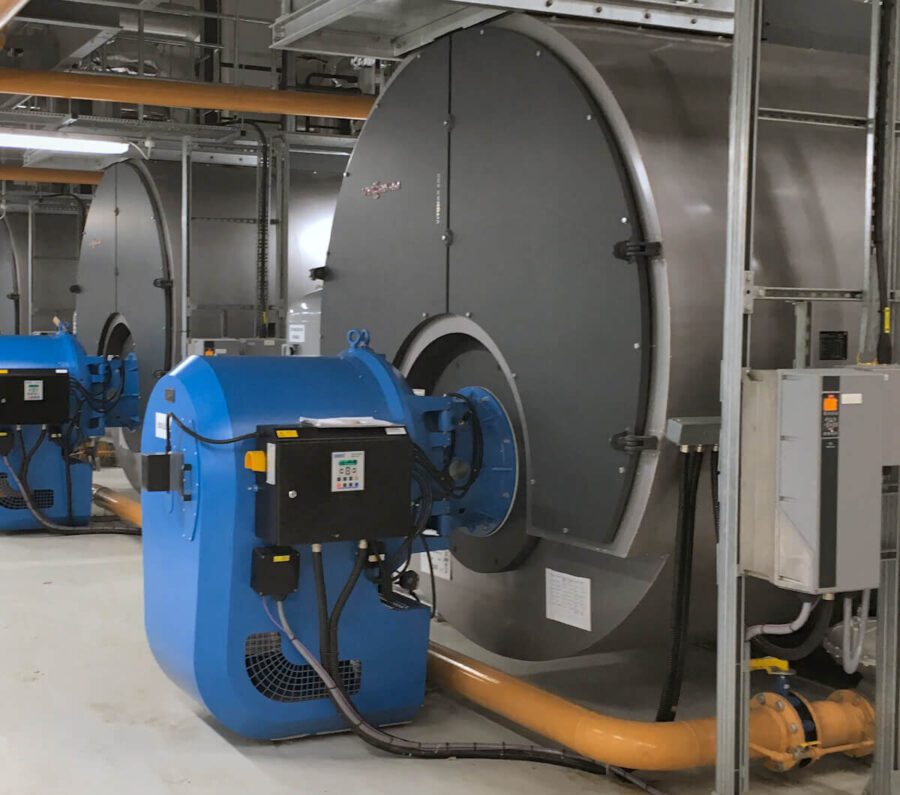
Industrial burners have been at the forefront of this revolution, which has dramatically changed the landscape of industrial manufacturing and energy production over the past century. These sophisticated devices have profoundly changed the way businesses approach combustion, transforming it from a crude, inefficient process to a precisely controlled science that drives productivity while reducing environmental impact. One of the most significant technological advancements in contemporary industry is the transition of industrial burners from simple flame-producing devices to intelligent, computer-controlled systems.
The evolution of industrial burners is reflective of the broader industrial revolution, as they are the foundation of numerous manufacturing processes, including food processing and steel production. Excessive fuel consumption, inadequate heat distribution, and substantial emissions were the hallmarks of early combustion systems, which presented both economic and environmental challenges. The paradigm was completely transformed by the introduction of sophisticated industrial burners, which provided unparalleled control over flame characteristics, fuel efficiency, and emission profiles. This transformation has allowed industries to reduce operational costs and satisfy increasingly stringent regulatory requirements, resulting in a win-win situation that has driven widespread adoption across virtually every sector.
Modern industrial burners are significantly more technologically advanced than their predecessors. Precision-engineered fuel delivery systems, intelligent control mechanisms that continuously optimise combustion parameters, and sophisticated materials that can withstand extreme temperatures are all part of contemporary designs. Modern industrial burners are equipped with multi-stage firing capabilities, which enable operators to dynamically alter the heat output in accordance with the real-time process requirements. In industries where production demands vacillate, this adaptability has been invaluable, allowing facilities to maintain optimal efficiency regardless of throughput levels. Industrial burners have been transformed into intelligent devices that can self-diagnose, generate predictive maintenance alerts, and make automated adjustments to ensure optimal performance without the need for constant human intervention as a result of the integration of electronic controls and sensors.
The design and operation of industrial burners have become increasingly reliant on environmental considerations. Nitrogen oxides, carbon monoxide, and particulate matter were produced in substantial quantities by conventional combustion systems, which exacerbated climate change concerns and deteriorated air quality. Innovative combustion techniques, including ultra-lean premix combustion, flue gas recirculation, and staged air introduction, are employed by contemporary industrial burners to overcome these obstacles. These technologies have allowed industrial burners to accomplish emission levels that were unimaginable just a few decades ago. In fact, some systems have reduced nitrogen oxide emissions by over ninety percent when compared to conventional designs. This environmental progress has enabled industries to expand operations while simultaneously meeting or exceeding regulatory standards, illustrating that economic development and environmental stewardship do not have to be mutually exclusive objectives.
Industrial burners have revolutionised combustion technology in another way: fuel flexibility. In contrast to the early systems, which were specifically designed for specific fuel types, modern industrial burners are capable of seamlessly transitioning between natural gas, liquefied petroleum gas, light oils, heavier oils, and even renewable fuels like biogas or hydrogen blends. Operators can leverage this adaptability to monetise on favourable fuel pricing, maintain continuity during supply disruptions, and transition to more sustainable energy sources as they become economically viable. This flexibility provides them with strategic advantages. A substantial accomplishment in engineering adaptability is the capacity of industrial burners to accommodate a variety of fuel types without sacrificing efficiency or emissions performance, thereby future-proofing industrial investments against the changing energy landscape.
Advanced industrial burners have an economic influence that is felt throughout the entire production ecosystem. Modern systems achieve efficiency levels exceeding ninety-five percent under optimal conditions, which directly translates to reduced fuel consumption and improved thermal efficiency. These efficiency improvements result in substantial cost reductions for energy-intensive industries, which in turn improve their competitive position in global markets. Industrial burners with turndown ratios of twenty-to-one or higher allow facilities to operate efficiently across a broad range of outputs, eliminating the necessity to cycle equipment on and off, which brings with it the associated wear, energy waste, and production disruptions. The return on investment and operational predictability have been further enhanced by the reduction of maintenance requirements and unplanned downtime, which is a result of the reliability enhancements that are inherent in contemporary industrial burner designs.
A critical yet occasionally disregarded aspect of the evolution of industrial burners is the implementation of safety enhancements. Flame supervision devices, automatic fuel shut-off valves, purge cycle controls, and interlocked ventilation systems are among the numerous redundant safety features that are integrated into contemporary systems. These features collectively reduce the likelihood of hazardous conditions. Modern industrial burners are equipped with advanced ignition systems that guarantee consistent ignition and prevent the accumulation of hazardous unburned fuel. The automatic execution of intricate safety sequences by industrial burners is made possible by the integration of programmable logic controllers, which eliminates the potential for human error and guarantees consistent adherence to established protocols. These safety enhancements have resulted in substantial decreases in workplace incidents associated with combustion equipment, thereby safeguarding personnel and concurrently decreasing liability exposure and insurance expenses.
The digitisation of industrial burners has ushered in new frontiers in the optimisation and administration of combustion. Modern systems produce an immense amount of operational data, including fuel flow rates, air ratios, combustion temperatures, emission levels, and equipment health indicators. Operators are now capable of identifying inefficiencies, predicting maintenance requirements, and optimising combustion parameters in previously unattainable ways by utilising advanced analytics on this data. Industrial burners that are equipped with connectivity features can be remotely monitored and adjusted, which allows for the centralisation of the administration of geographically dispersed facilities and the provision of support by specialists regardless of their physical location. This digital transformation has transformed industrial burners from standalone equipment to integral elements within broader industrial internet of things ecosystems, thereby enabling the unlocking of synergies with other process equipment and enterprise management systems.
Industrial burner advancements have had a particularly profound impact on certain industries. Industrial burners capable of maintaining tight temperature tolerances while evenly distributing heat across kiln chambers have greatly benefited the ceramics sector, which necessitates precision temperature control and uniform heating. Industrial burners are used in process heaters and reformers at petrochemical facilities, where the kinetics of reactions are significantly influenced by thermal profiles. Modern burners make it possible to intensify processes and increase yields. The metals industry depends on industrial burners for melting, heat treatment, and finishing operations, in which the quality of the product and the properties of the material are directly influenced by the combustion characteristics. Industrial burners are used in ovens, dryers, and cookers used in food processing facilities, where the selection of equipment is influenced by sanitation standards, energy costs, and product consistency.
In order to resolve new challenges and opportunities, industrial burners are constantly evolving. Engineers are developing industrial burners that can handle high hydrogen content fuels while managing the unique combustion characteristics these fuels exhibit, as the transition to hydrogen as a clean fuel vector presents both challenges and opportunities for combustion technology.. The utilisation of additive manufacturing techniques is facilitating the production of industrial burner components with intricate geometries that are unattainable through conventional machining. This provides new opportunities for the optimisation of combustion dynamics and flow patterns. Real-time optimisation that accounts for multiple variables simultaneously and adapts to changing conditions with minimal human intervention is enabled by artificial intelligence and machine learning algorithms, which promise to further enhance industrial burner control systems.
The continual innovation in industrial burner technology is being driven by the tightening of the regulatory environment surrounding industrial combustion. The emission limits of jurisdictions worldwide are becoming increasingly stringent, necessitating that industries implement the most advanced technologies available in order to preserve their operating permits. Industrial burners are a crucial compliance tool that allows facilities to satisfy current requirements and leave space for future regulations. Manufacturers have prioritised the development of ultra-low emission industrial burners, with research concentrating on innovative combustion methods like catalytic combustion and flameless oxidation, which have the potential to further reduce emission limits.
In summary, industrial burners have profoundly transformed combustion technology from a rudimentary heat source to a sophisticated, efficient, and environmentally responsible component of modern manufacturing. The ongoing innovation that is visible in industrial burner design is indicative of the broader trends toward operational excellence, sustainability, and digitalisation that are prevalent in the modern industry. The significance of sophisticated industrial burners will only grow as environmental pressures intensify and energy costs fluctuate, solidifying their status as indispensable enablers of sustainable, competitive manufacturing. The remarkable transformation of industrial burners from basic flame producers to intelligent combustion systems serves as an illustration of how concentrated engineering endeavours can revolutionise fundamental industrial processes, resulting in benefits that ripple throughout entire economies and support environmental objectives that benefit society as a whole.